


Professional Skincare vs. Drugstore Skincare: Is There Really a Difference?

The Truth About Professional Skincare, "Medical Grade" Products, and What Actually Delivers Results
Walk down the skincare aisle of any pharmacy or big-box retailer and you'll see hundreds of products promising to erase wrinkles, clear acne, brighten dark spots, and give you glowing skin.
At first glance, it can feel overwhelming—and confusing.
If a $25 serum contains Vitamin C, how could it really be that different from a professional product recommended by your esthetician?
It's a fair question.
The answer isn't simply about price. It's about formulation, stability, ingredient quality, delivery systems, and whether the product is actually designed to create measurable changes in the skin.
Let's take a closer look:
Is "Medical Grade Skincare" Actually a Real Classification?
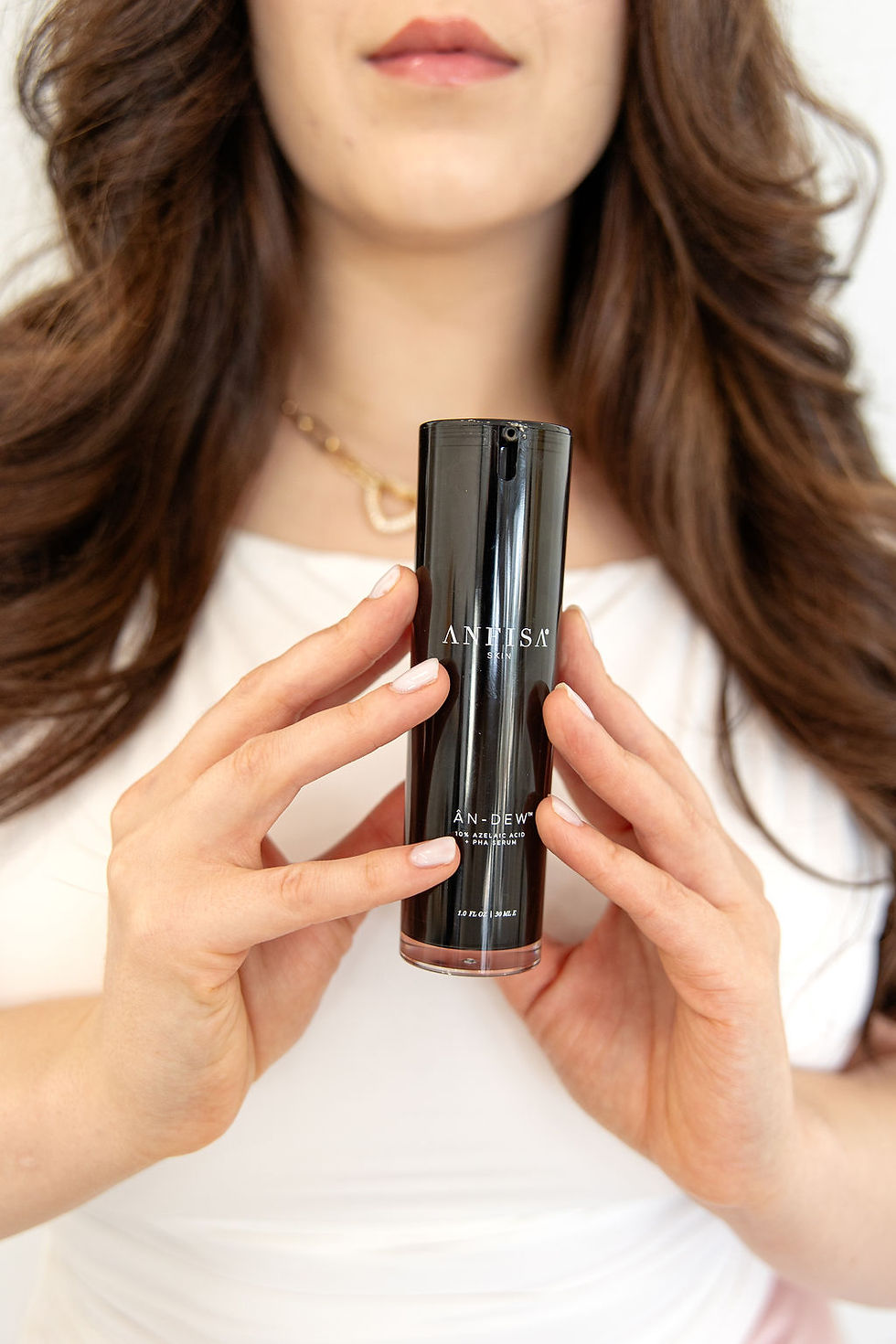
This is one of the biggest misconceptions in the skincare industry.
The terms "medical-grade skincare" and "professional skincare" are widely used, but they are not official classifications recognized by the FDA or another governing body.
Instead, these terms are commonly used to describe skincare products that are:
Recommended by licensed skincare professionals
Often sold through dermatology offices, medical spas, or esthetic practices
Developed with a stronger emphasis on corrective skincare
Frequently supported by clinical research and professional education
So while the terminology isn't regulated, there are often meaningful differences in how these products are developed.
If the Ingredients Are the Same, Why Do the Products Perform Differently?
This is where skincare becomes science.
Many products advertise the same hero ingredients:
Vitamin C
Retinol
Hyaluronic Acid
Niacinamide
Peptides
But simply seeing an ingredient on the front of the bottle doesn't tell the whole story.
What matters is:
Which form of the ingredient is being used
How much of it is included
Whether it's stable
Whether it can actually penetrate the skin
What other ingredients it's paired with
Think of it like baking:
Two people can both use flour, eggs, butter, and sugar—but one cake may taste dramatically better because of the recipe, ingredient quality, and technique.
Skincare works the same way!
Are All Forms of an Ingredient the Same?
Not at all.
Vitamin C is one of the best examples.
There are many different forms of Vitamin C used in skincare, including:
L-Ascorbic Acid
Sodium Ascorbyl Phosphate
Magnesium Ascorbyl Phosphate
Tetrahexyldecyl Ascorbate
Ascorbyl Glucoside
Each has different:
Stability
Skin penetration
Irritation potential
Antioxidant activity
Clinical applications
Some forms are better suited for acne-prone skin.
Others are ideal for pigmentation.
Others excel at collagen stimulation.
This is why two products can both advertise "Vitamin C" while producing very different results. The same principle applies to retinoids, peptides, hyaluronic acid, growth factors, and many other ingredients.

Why Are Professional Products Often More Effective?
Professional skincare companies often spend years refining formulations that maximize both effectiveness and skin compatibility.
Rather than simply choosing popular ingredients, they focus on questions like:
How stable is the ingredient?
Will it remain active over time?
Can it penetrate where it's needed?
Does it work synergistically with other ingredients?
Has it demonstrated measurable improvements in clinical testing?
Many professional skincare brands invest heavily in formulation science and clinical evaluation before bringing products to market.
Why Can't Drugstore Products Be Stronger?
One reason is that over-the-counter skincare must appeal to millions of consumers with vastly different skin types and levels of sensitivity.
If a mass-market moisturizer caused irritation in a large percentage of users, it would quickly receive poor reviews and be difficult to sell.
As a result, many over-the-counter products are formulated to be:
Pleasant to use
Well tolerated by most people
Easily incorporated into a wide variety of routines
That doesn't necessarily make them bad products. But it can mean they are formulated more conservatively, prioritizing broad compatibility over maximum corrective potential.
Professional products, on the other hand, are often recommended after your skin has been evaluated by a licensed esthetician who can determine which formulations are appropriate for your unique concerns.
Does More Expensive Always Mean Better?

No. Price alone doesn't determine quality.
There are expensive products with beautiful packaging and impressive marketing campaigns that deliver very little.
Likewise, there are affordable products that perform exceptionally well.
Instead of focusing only on price, ask questions like:
Is this ingredient supported by research?
Is the formulation stable?
Has the product been clinically evaluated?
Is it appropriate for my skin concerns?
Has it been recommended by someone trained to understand skin biology?
Those questions will tell you much more than the price tag.
Why Do So Many Drugstore Products Promise Big Results?
Marketing is powerful.
Some of the largest cosmetic companies spend far more on advertising and brand awareness than they do educating consumers about formulation science.
Beautiful packaging, celebrity endorsements, viral social media campaigns, and influencer partnerships can all create excitement around a product—but they don't necessarily indicate how well it performs.
Professional skincare companies often take a different approach.
Rather than relying primarily on mass advertising, many focus on:
Research and development
Clinical testing
Continuing education for professionals
Long-term client outcomes
This is one reason many professional brands are sold primarily through licensed estheticians and dermatology practices rather than retail shelves.
Why Does Working with an Esthetician Matter?

Even the best skincare products aren't one-size-fits-all. A product that transforms one person's skin may not be right for someone else.
A trained esthetician considers factors such as:
Your skin type
Barrier health
Lifestyle
Acne triggers
Pigmentation
Sensitivity
Current routine
Treatment goals
Instead of guessing, you receive products selected specifically for your skin.
You can learn more in our blog:Why You Should Trust a Professional with Persistent Skin Problems.
What Professional Skincare Brands Does Sanctuary Skin Recommend?
At Sanctuary Skin, we've carefully curated every product line we carry. We don't choose products because they're trendy—we choose them because we've seen them consistently deliver results for our clients.
Some of the professional brands you'll find in our practice include:
DMK
Epicutis
Face Reality
Hydrinity
ANFISA
Should You Throw Away All Your Drugstore Skincare?
Not necessarily. Some over-the-counter products can absolutely have a place in a skincare routine.
Our goal isn't to shame drugstore skincare with this blog, but rather to understand that if you've been struggling with persistent acne, pigmentation, redness, or signs of aging—and you've been cycling through product after product without seeing meaningful improvement—it may not be because skincare "doesn't work."
It may simply be that you haven't found the right formulation or the right guidance yet.
Ready to Invest in Skincare That Works?
Healthy skin doesn't happen by accident. It happens through thoughtful product selection, consistent use, and recommendations based on science—not marketing.
At Sanctuary Skin in Virginia Beach, we've spent years testing products, researching ingredients, and carefully curating the brands we trust enough to recommend to our clients.
Whether you're looking to clear acne, brighten pigmentation, strengthen your skin barrier, or age gracefully, we're here to help you build a routine that's personalized to your skin and your goals.
Shop Our Curated Collection
Browse our online skincare store to explore the professional products we use every day in our treatment rooms and recommend to our clients with confidence.
Or schedule a facial with one of our Master Estheticians, and we'll help you create a customized skincare routine designed specifically for your skin.
Continue Learning About Skincare
You may also enjoy:
Sanctuary Skin Virginia Beach, VA 757-646-7985


Comments