


Melasma Treatments in Virginia Beach: What Actually Works?

Understanding Melasma, What Triggers It, and How Sanctuary Skin Treats Stubborn Pigmentation
If you've been trying to get rid of melasma, you've probably discovered one of the most frustrating things about this condition:
You can lighten it—and then seemingly watch it come right back.

Melasma usually appears as irregular brown or gray-brown patches, most commonly across the cheeks, forehead, upper lip, nose, or chin. It can become darker during the summer, appear during pregnancy, develop after starting hormonal medications, or seemingly become noticeable without one obvious cause.
And unlike an ordinary sunspot, simply trying to exfoliate the pigment away isn't necessarily the answer.
Melasma is a complex and often chronic pigment condition. Successful treatment requires us to think about why the pigment is being produced in the first place, what continues triggering it, how we can safely reduce existing pigment, and how we can help prevent it from returning.
At Sanctuary Skin in Virginia Beach, we take a conservative, long-term approach to melasma treatment using professional skincare and carefully selected corrective treatments, including the Aerolase Neo Elite laser.
The goal isn't to aggressively attack the pigment.
With melasma, smarter and gentler can often be better.
What Is Melasma?
Melasma is a pigmentation condition in which areas of the skin produce too much melanin, creating patches of discoloration that are usually brown, tan, or gray-brown.
Your melanocytes are the cells responsible for producing melanin, the pigment that gives your skin its color. In melasma-prone skin, those pigment-producing cells become overly active and produce more pigment than they should.
Think of melanocytes almost like overly sensitive pigment factories.
In normal skin, they increase pigment production when appropriate—for example, after UV exposure.
In melasma-prone skin, those factories are much easier to switch on.
Sun exposure, hormones, heat, visible light, inflammation, and other triggers can contribute to a cycle in which pigment production repeatedly becomes stimulated.
That's why treating melasma isn't simply about removing the brown pigment you can see today.
We also need to work on keeping those pigment-producing cells as calm and regulated as possible.
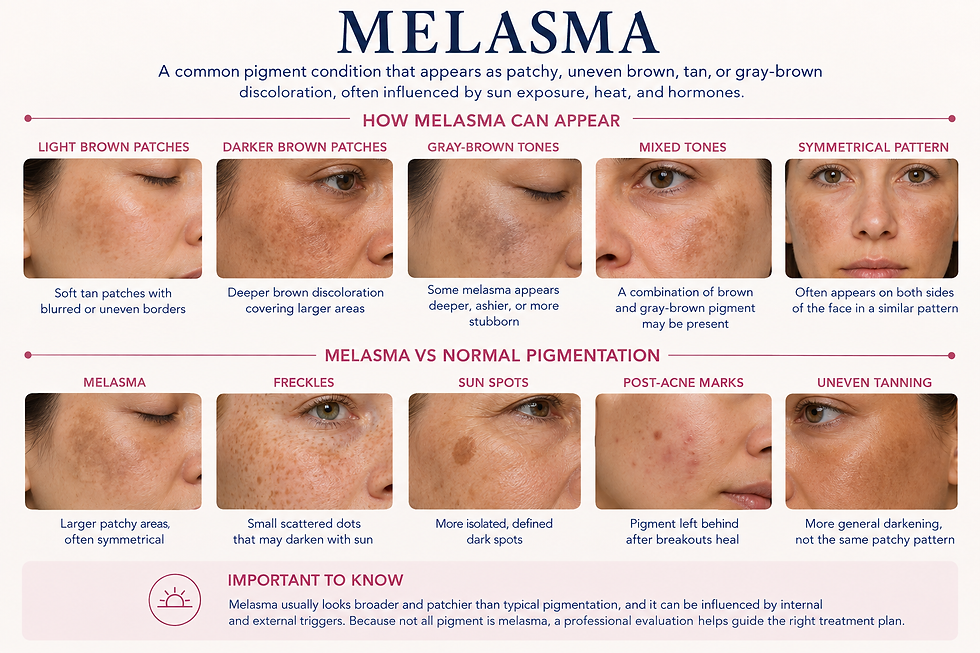
Why Did I Suddenly Develop Melasma?
Sometimes there is an obvious trigger, and sometimes there isn't.
Melasma is especially common in women, and hormonal changes are strongly associated with its development. Pregnancy is such a common trigger that melasma occurring during pregnancy has historically been called the "mask of pregnancy."
Hormonal birth control can also trigger melasma in some people. Sun exposure is another major contributor, and some medications that increase photosensitivity can potentially make pigmentation more difficult to control.
Genetics also appear to matter. If melasma runs in your family, you may simply have skin that is more predisposed to developing it.
Often, there isn't one single cause.
A client may have a genetic predisposition, experience hormonal changes, live an active outdoor lifestyle, and accumulate years of UV exposure before the pigmentation becomes obvious enough for her to start asking: "Where did these patches come from?"
What Triggers Melasma and Makes It Darker?
Understanding your triggers is one of the most important parts of successfully managing melasma.
Common triggers include:
UV exposure
Visible light
Hormonal fluctuations
Pregnancy
Hormonal medications
Heat
Skin inflammation and irritation
Tanning beds
Certain medications
In some individuals, stress may also contribute
Sunlight is particularly important. UV exposure stimulates melanin production, which is why many clients notice that their melasma becomes significantly darker during the summer. Visible light can also worsen melasma, particularly in darker skin tones.
This is why treating melasma without addressing the triggers is a little like mopping the floor while the faucet is still running.
We can work incredibly hard to lighten existing pigment, but if the skin is continually receiving signals to produce more pigment, maintaining those results becomes much more difficult.
Does Heat Make Melasma Worse?
For many melasma-prone clients, heat is an important consideration.
This doesn't only mean getting a sunburn. Think about all the ways your face can become repeatedly hot: intense outdoor exercise, saunas, hot yoga, prolonged sun exposure, and other sources of significant heat.
Melasma has a vascular and inflammatory component in addition to pigment, which is one reason we don't think about it as simply a collection of brown spots.
That doesn't mean you need to spend the rest of your life hiding indoors.
It means that if you know your melasma becomes noticeably darker with heat, reducing unnecessary heat exposure can become part of your treatment strategy.
Why Does My Melasma Keep Coming Back After I Treat It?
Because melasma isn't simply pigment sitting on the surface waiting to be removed.
Melasma-prone skin retains the tendency to produce excess pigment.
A treatment may significantly lighten what you see, but hormones, UV exposure, visible light, heat, and inflammation can stimulate pigment production again.
The American Academy of Dermatology notes that melasma can persist for years or even a lifetime, although it can sometimes fade when a specific trigger—such as pregnancy or medication—is removed.
This is one of the most important things we explain to our clients at Sanctuary Skin:
Melasma is better thought of as something we manage rather than something we permanently "cure."
That doesn't mean you can't achieve a dramatic improvement.
It means maintaining beautiful results requires a long-term relationship with your skin.
What Is the Best Treatment for Melasma?
There isn't one universally best treatment.
In fact, melasma usually responds best when we address it from multiple directions at the same time.
At Sanctuary Skin, a melasma treatment plan may include:
Aerolase Neo Elite laser treatments
Professional pigment-correcting skincare
Carefully selected chemical peels
Microneedling treatments
Treatments designed to support healthy skin function
Daily sunscreen and visible-light protection
Identifying and reducing personal melasma triggers
Which combination we recommend depends on your skin tone, how reactive your pigmentation is, the apparent depth and pattern of the pigment, your lifestyle, previous treatments, and how your skin responds.
Melasma is exactly the kind of condition where customized treatment matters.
Is Aerolase Neo Elite Good for Melasma?
Aerolase Neo Elite is one of our favorite tools for treating melasma at Sanctuary Skin.

And the reason has everything to do with the way melasma behaves.
One of the challenges with treating melasma is that too much inflammation and thermal injury can potentially stimulate additional pigment, particularly in pigment-prone skin.
That means the most aggressive treatment isn't necessarily the best treatment.
The Aerolase Neo Elite is a 1064-nm Nd:YAG laser that delivers its energy in extremely fast 650-microsecond pulses. Its short pulse duration limits the amount of time heat has to spread into surrounding tissue while allowing us to target structures within the skin.
That's an important distinction when treating a condition that can become worse when the skin is excessively irritated.
Can Laser Make Melasma Worse?
Yes, the wrong laser or an overly aggressive treatment can make melasma worse.
This is one reason people sometimes become afraid of treating melasma with a laser at all.
Energy-based treatments that generate excessive inflammation or heat can potentially trigger post-inflammatory hyperpigmentation or a melasma flare, and this risk is particularly important in deeper skin tones.
But not every laser behaves the same way.
The Aerolase Neo Elite's 650-microsecond pulse duration is designed to deliver energy quickly while reducing prolonged thermal exposure to surrounding tissue. Aerolase reports that the technology can be used across Fitzpatrick skin types, including darker skin tones, and a 2026 retrospective study of 196 people evaluated the 650-microsecond 1064-nm Neo Elite, alone and in combination with microneedling, specifically for facial melasma.
This is precisely why we chose this technology for Sanctuary Skin.
We want to correct pigment without unnecessarily provoking the skin we're trying to calm.
How Many Aerolase Treatments Do I Need for Melasma?
Melasma should usually be approached as a series rather than a one-and-done treatment.
A typical melasma treatment plan includes approximately 4–6 treatments spaced 2–4 weeks apart, although the appropriate number and timing depend on the individual.
At Sanctuary Skin, we're looking for progressive improvement rather than trying to aggressively remove every visible patch in one appointment.
Your treatment plan may also change as your skin changes.
Once we've reduced a significant amount of visible pigmentation, our focus can gradually shift from correction to maintenance and prevention.
Can Microneedling Help Melasma?
Microneedling can be another useful tool in a carefully designed melasma treatment plan.
Microneedling creates controlled microchannels in the skin and initiates a wound-healing response without relying on the same kind of thermal energy as many laser treatments. It is best known for collagen remodeling, but it has also been studied as an effective complimentary treatment for melasma.

Interestingly, the 2026 study of the Aerolase Neo Elite also evaluated patients receiving the laser in combination with microneedling. The researchers described microneedling as an adjunctive approach that promotes collagen regeneration while preserving epidermal integrity.
For the right client, we may incorporate microneedling into a broader pigmentation strategy rather than expecting one modality to do everything.
Can Chemical Peels Help Melasma?
Chemical peels can help address superficial pigmentation and cellular turnover, but melasma requires a thoughtful approach.
This isn't a condition where we necessarily want to perform the strongest peel the skin can tolerate. An overly aggressive peel can create significant inflammation—and inflammation can stimulate pigment production in susceptible skin.
Instead, we choose the peel, depth, frequency, and supporting skincare according to the individual.
Again, the goal with melasma is not:
"How aggressively can we remove this pigment?"
It's:
"How effectively can we improve this pigment without encouraging the skin to produce more?"
What Skincare Products Help Treat Melasma?
Professional treatments are only part of a successful melasma plan.
What you put on your skin every day may be even more important for maintaining your results.
At Sanctuary Skin, we build pigment-correcting home-care regimens around the individual rather than automatically giving every melasma client the same products.
However, a few of our favorite products for treatment and controlling melasma include:
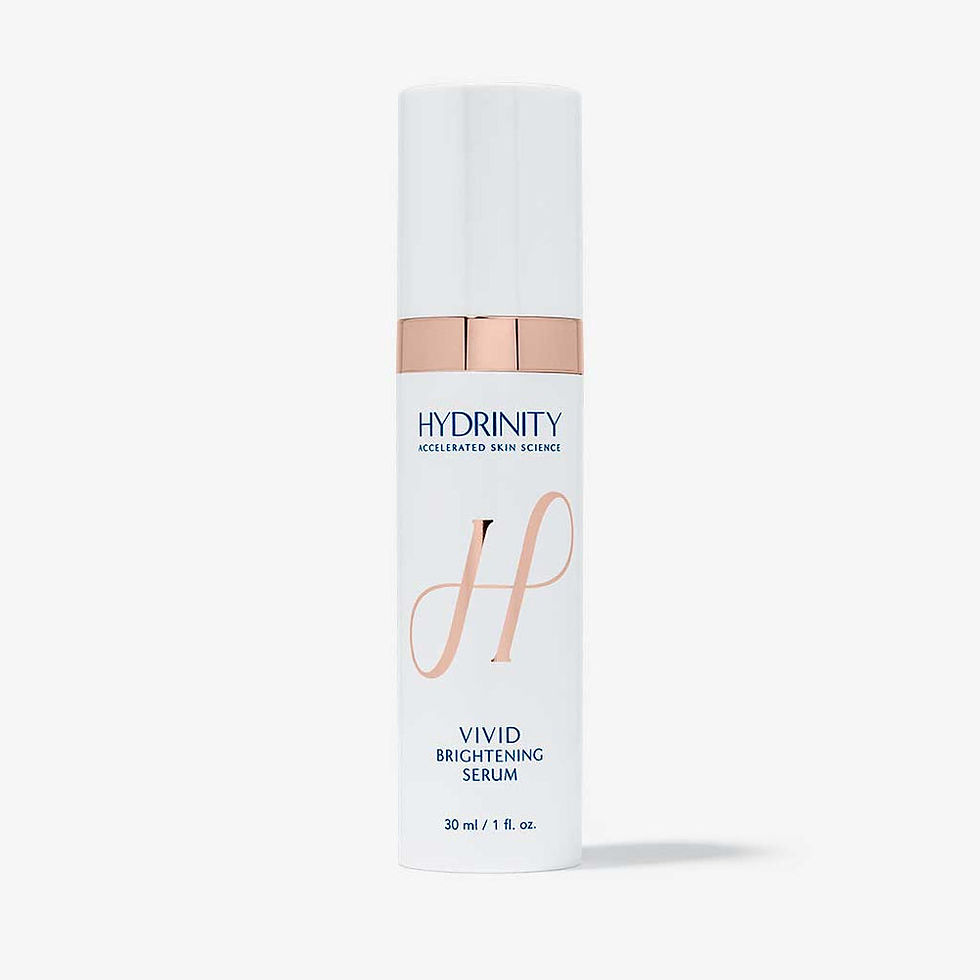
Hydrinity VIVID Brightening Serum
Hydrinity VIVID is a hydroquinone-free brightening serum formulated for hyperpigmentation, uneven tone, sun damage, and melasma-prone skin.
Its formula includes ingredients such as hexylresorcinol, oligopeptide-68, botanical AHAs, antioxidants, and peptides designed to address discoloration while supporting hydration.
DMK Melanotech Drops
DMK Melanotech Drops can be incorporated into a professional pigment-correcting regimen to help address uneven pigmentation and support a more even-looking complexion.
We especially like having options like this because melasma skincare needs to be corrective enough to influence pigmentation without unnecessarily irritating the skin.
Epicutis Arctigenin Brightening Treatment
Epicutis Arctigenin is an excellent option when we want to address pigmentation while maintaining our emphasis on barrier health and inflammation control.
The formula combines Epicutis' ABSO burdock-seed extract with HYVIA®, antioxidants, and ferulic acid. We recommend it for hyperpigmentation as well as hydration, tone/redness, and barrier support.
Lipid Shield SPF 30
If you're investing in melasma treatment but aren't consistently protecting your skin from UV exposure, you're making the job much harder.
Daily broad-spectrum SPF 30 or higher is essential!
The American Academy of Dermatology recommends considering a tinted sunscreen containing iron oxides because it can provide additional protection against visible light.
Which product is right for you depends on what else is happening in your skin, which is why we recommend having your regimen professionally customized rather than simply buying every brightening product you can find.
Can Melasma Ever Completely Go Away?
Sometimes melasma fades substantially, particularly when a temporary hormonal trigger disappears. For other people, it behaves more like a chronic condition that requires ongoing management.
But chronic does not mean hopeless.

This distinction matters because we meet clients who have spent years believing there is simply nothing they can do about their pigmentation.
There is.
Modern treatment gives us multiple ways to approach melasma: regulating pigment production with professional skincare, protecting against the triggers that stimulate melanocytes, carefully improving existing pigmentation, and using technologies such as the Aerolase Neo Elite that allow us to approach pigment without relying on an extremely aggressive treatment.
The goal may not be to promise that you'll never see another patch of melasma again.
The goal is to get your pigmentation lighter, more even, more manageable, and much less dominant when you look in the mirror—and then help you maintain that progress.
Where Can I Get Melasma Treatment in Virginia Beach?
Sanctuary Skin in Virginia Beach specializes in customized treatment plans for hyperpigmentation and melasma.
Our Master Estheticians take a conservative, results-oriented approach that considers your skin tone, pigmentation, triggers, barrier health, home-care routine, lifestyle, and long-term goals before deciding how aggressively the skin should be treated.
Your plan may include Aerolase Neo Elite laser treatments, microneedling, chemical peels, professional pigment-correcting skincare, and ongoing maintenance, depending on what is appropriate for your skin.
Most importantly, we don't treat melasma like an isolated brown spot.
We treat the skin that is creating the pigment.
Ready to Start Treating Your Melasma?
If you've been searching for melasma treatments in Virginia Beach because you're tired of covering your pigmentation or watching it return every summer, there are options.
You don't have to figure out which treatment, laser, or skincare product you need on your own.


Comments