


Dermatologist or Esthetician: Who Should You See to Treat Acne?

Understanding Your Options for Adult and Teen Acne Treatment
If you, or your teenager, suddenly starts struggling with acne, one of your first thoughts may be: "Do I need to make an appointment with a dermatologist?"
For decades, that has been the traditional path. And it makes sense: acne is a skin condition, dermatologists are medical doctors specializing in the skin.
Dermatologists absolutely have an important role in acne treatment, particularly when acne is severe, painful, or rapidly scarring the underlying skin.
But a dermatologist isn't your only option to treat acne.
For many people with mild-to-moderate acne, persistent clogged pores, blackheads, inflammatory breakouts, or recurring adult acne, working closely with an esthetician can offer a very different approach. One centered around regular hands-on treatment of the skin, extractions, carefully selected home care products, and more consistent monitoring of how the skin responds.
So which should you choose? Let's break it down.
Should I See a Dermatologist or an Esthetician for Acne?
It depends on the severity and type of acne you're experiencing.
A dermatologist approaches acne as a medical condition and has the ability to diagnose conditions and prescribe medication.
An esthetician approaches acne through the ongoing management of the skin itself.
That can include:
Professional extractions
Acne facials
Chemical peels
LED light therapy
High frequency
Laser treatments where appropriate
Exfoliation
Barrier support
Professional skincare
Education about habits and products
Regular evaluation of the skin's progress
At Sanctuary Skin, we're able to spend an extended amount of time actually looking at, touching, treating, and understanding your skin during your appointments. And that difference can be incredibly valuable for someone who has spent months, or years, trying to figure out why their acne won't clear.
What Will a Dermatologist Usually Prescribe for Acne?
Treatment depends on the patient and severity of the acne, but dermatologists have several medications available.

A traditional dermatology treatment plan may include one or more of the following:
Topical retinoids
Benzoyl peroxide
Topical and oral antibiotics
Hormonal medications and birth control
Spironolactone
Isotretinoin/Accutane
These medications can be very effective. They can also have side effects.
Understanding the benefits and limitations of each option can help you make a more informed decision about the best approach to treating your acne.
Are Prescription Retinoids Good for Treating Acne?
Prescription topical retinoids such as tretinoin and adapalene are widely used for acne because they help normalize skin-cell turnover, prevent clogged pores, and reduce inflammation.
They can work extremely well.
But there's a catch many acne clients discover quickly:
More aggressive topical treatments don't always mean better results.
Retinoids can cause:
Dryness
Peeling
Redness
Irritation
Increased sensitivity
Higher risk of sun damage during use
There is often an adjustment period, and using too much, or combining a retinoid with an already aggressive skincare routine, can leave the skin barrier very irritated.
Clear skin shouldn't have to mean chronically uncomfortable skin.
Do Antibiotics Get Rid of Acne?
Oral antibiotics such as doxycycline, minocycline, and sarecycline are sometimes prescribed for moderate-to-severe inflammatory acne.
They can be very effective at rapidly reducing bacteria and inflammation. However, antibiotics aren't intended to be a permanent acne-management strategy.

Current dermatology guidelines actually recommend limiting systemic antibiotic use whenever possible because of concerns including antibiotic resistance and other antibiotic-associated complications.
Antibiotics don't only affect the bacteria involved in acne. Because they work systemically, they can also disrupt beneficial bacteria elsewhere in the body, including the gut and vaginal microbiomes. For some women, that disruption can alter the normal vaginal flora and create an environment where yeast overgrowth—and subsequent yeast infections—are more likely to occur. This is one reason antibiotics aren't something we view as an ideal long-term solution for acne that can be successfully managed through other methods.
This doesn't mean antibiotics are "bad." It means they're a medical tool that should be used thoughtfully.
For someone experiencing severe, painful, rapidly progressing inflammatory acne, a temporary course of antibiotics may be exactly what is needed to bring inflammation under control and reduce the immediate risk of scarring.
Does Birth Control Help Hormonal Acne?
For some women, yes.
Certain oral contraceptives can reduce hormonal signals that stimulate oil production, which can make them effective for hormonal acne. However, birth control is a systemic medication that affects the entire body—not a treatment specifically designed for the skin.
Depending on the individual and the formulation, side effects can include headaches, nausea, breast tenderness, mood changes, changes in bleeding patterns, and other concerns. Hormonal contraceptives also carry a small but important increased risk of blood clots, which makes them inappropriate for some women.

There's another important consideration: birth control can control hormonal acne without permanently changing the underlying tendency to develop it. In other words, your skin may look clearer while you're taking the medication because hormonal signals that contribute to acne are being suppressed. But, if you discontinue birth control, those signals can return, and acne can return with them.
Many women experience a noticeable flare or recurrence of acne in the months after stopping hormonal contraception.
That doesn't mean birth control is a bad medication or that women shouldn't use it. It can be an excellent choice when contraception is also desired or when a medical provider determines that hormonal therapy is appropriate. But if the primary reason you're considering birth control is simply to control acne, we believe it's worth asking whether the skin can be successfully managed without relying on a systemic medication indefinitely.
Is Accutane the Best Treatment for Severe Acne?
Isotretinoin—often still referred to by the former brand name Accutane—is one of the most powerful acne medications available. It's generally reserved for severe acne, particularly nodular/cystic acne or acne that hasn't adequately responded to other treatments.
Isotretinoin dramatically decreases oil production and affects several biological processes involved in acne formation. Because it's so powerful, it also requires close medical supervision.
Extreme dryness is one of the hallmarks of isotretinoin treatment.
Dry, cracked lips are extremely common, but dryness can extend far beyond the lips. The face and body will become dry, flaky, irritated, or more sensitive, and some patients experience dry eyes and nosebleeds related to dryness of the mucous membranes.
The effects aren't necessarily limited to the skin. Musculoskeletal symptoms are recognized side effects of isotretinoin as well. Joint pain, back pain, and general musculoskeletal discomfort can occur during treatment.

FDA-approved labeling lists dry skin, dry lips, back pain and arthralgia (joint pain) among commonly reported adverse reactions.
For patients who can become pregnant, there is another significant consideration. Isotretinoin can cause severe birth defects and pregnancy loss, which is why the FDA requires isotretinoin to be dispensed through the iPLEDGE risk-management program. Patients who can become pregnant must complete pregnancy testing before beginning treatment and continue pregnancy testing during and after treatment, along with following iPLEDGE pregnancy-prevention requirements. Depending on the patient's circumstances, that may involve using approved contraception methods or committing to continuous abstinence for the required period.
So for a teenage girl or woman considering isotretinoin, acne treatment can involve much more than simply taking a pill each day—it requires ongoing medical monitoring and strict precautions to prevent pregnancy.
None of this means isotretinoin shouldn't be used. For severe, nodular, painful, or rapidly scarring acne, it can be an extraordinarily valuable medication and sometimes the appropriate medical intervention. But isotretinoin is a powerful systemic medication intended for severe acne, and its benefits need to be weighed against its effects, risks, and monitoring requirements.
Can an Esthetician Actually Treat Acne?
Absolutely! And for many people with mild-to-moderate acne, we believe working with an esthetician is one of the best places to start.
Acne may be classified as a medical skin condition, but that doesn't mean every case of acne requires medication or needs to begin in a dermatologist's office. Estheticians work with acne-prone skin every day, and much of what needs to happen to improve mild-to-moderate acne falls directly within our expertise.
We're continually working on the congestion, excess cellular buildup, inflammation, barrier health, and home-care habits that influence what happens inside the pore.
What is the Difference Between a Dermatology and an Esthetic Acne Appointment?
Perhaps the greatest advantage of esthetic acne care is the amount of hands-on time and ongoing attention we're able to give the skin.
Access to dermatology can be challenging, and appointments with specialists may require long waits, sometimes even as long as 6-9 months to get an appointment. Once you're there, a medical appointment also has a very different purpose and structure from an esthetic treatment.
Because medical appointments are generally structured around diagnosis and medical management—not extended hands-on skincare—the amount of time actually spent examining and discussing the skin with the dermatologist can be limited.
And this is something we hear from clients again and again when they arrive at Sanctuary Skin after trying the dermatology route:
They were prescribed a retinoid but didn't fully understand how introduce it to their skin to avoid side effects, they weren't told what products they should stop using with it, or their skin became painfully dry and irritated, so they stopped using it.
They were prescribed an antibiotic, their acne improved temporarily, and then the acne returned.
They were given multiple prescriptions but didn't understand which products to use, in what order, or how to manage the side effects.
Or they simply felt like no one had enough time to really look at their skin and figure out why they were still breaking out.
That isn't necessarily because the medication was inappropriate. It's because a prescription and a comprehensive acne-management program are not the same thing.
An esthetician's appointment is fundamentally different.

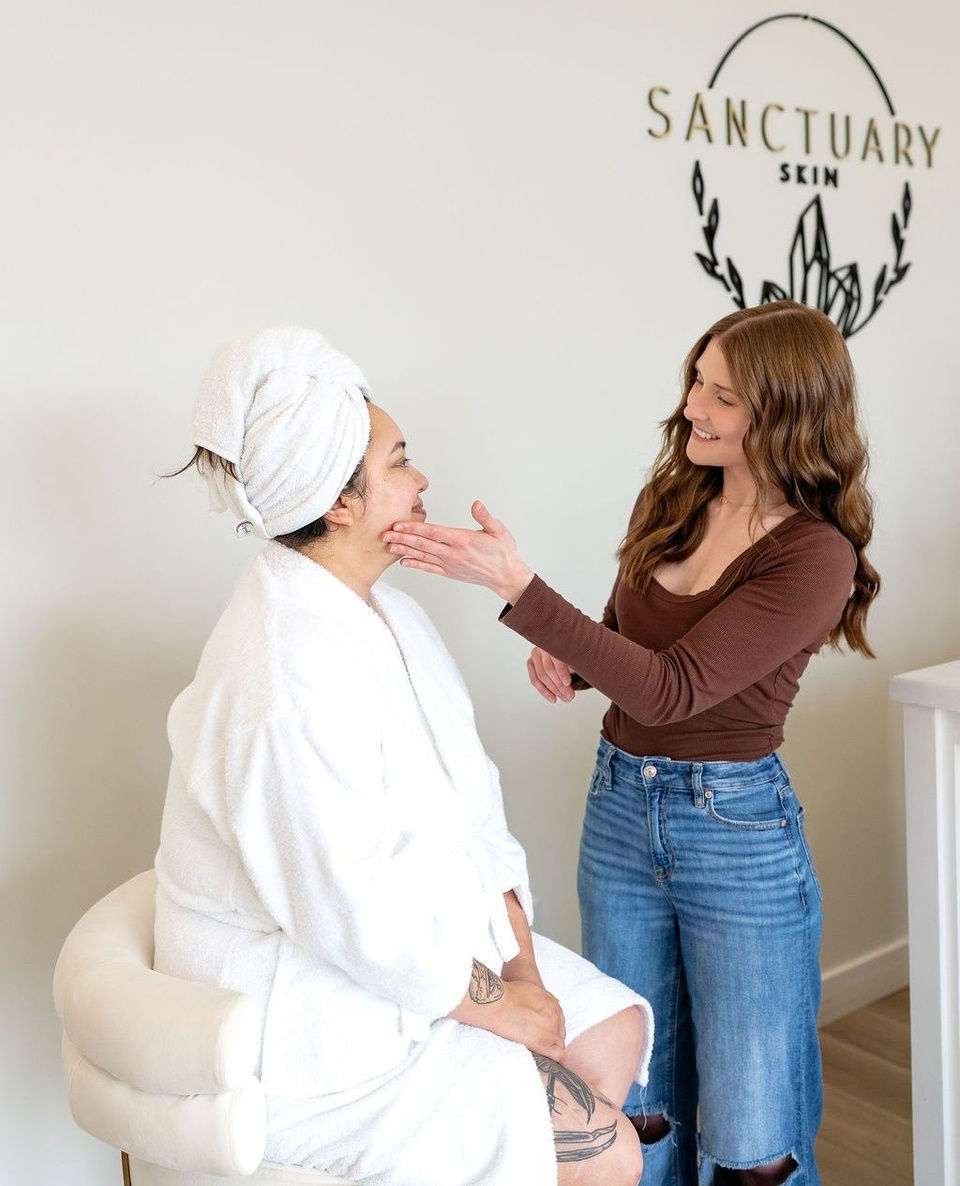
At Sanctuary Skin, we can spend an hour or more actively working with your skin.
We're not looking at it for a few minutes and sending you home with a prescription.
We're cleansing it, touching it, examining congestion under professional lighting, feeling where impactions are forming beneath the surface, performing extractions, assessing inflammation and barrier health, and watching how the skin responds throughout the treatment.
And then we're talking to you.
What are you washing your face with?
What moisturizer are you using?
What makeup are you wearing?
Are you picking?
Are your breakouts cyclical?
What hair products touch your face?
Are you exercising and leaving sweat on your skin?
Are you using five acne products at once because TikTok told you to?
Is your skin actually oily, or have you stripped it so aggressively that it's now dehydrated and inflamed?
Acne treatment requires detective work. And that takes time.
It also requires follow-up.
If accessing dermatology in your area means waiting months for an appointment or another follow-up, your skin can change dramatically during that time. With esthetic acne care, we can see clients much more regularly, which means we're continually assessing the skin rather than waiting months to find out whether the original plan worked.
We aren't simply prescribing something for acne. We're actively managing acne.
That's why, for the average teenager or adult dealing with mild-to-moderate acne, clogged pores, blackheads, recurring breakouts, and inflammatory pimples, our preference is to start with comprehensive esthetic acne care rather than immediately reaching for systemic medication.
What Does an Esthetician Do During an Acne Facial?
This is where professional esthetic acne treatment becomes very different from a medication-only approach.
Depending on the client's skin, an appointment may incorporate:
Professional cleansing and skin analysis: We evaluate oil production, congestion, inflammation, dehydration, barrier health, and the types of lesions present.
Exfoliation: Professional exfoliation can help loosen dead skin cells and congestion contributing to blocked pores.
Extractions: During an acne facial, an esthetician can carefully remove appropriate impactions without the picking, squeezing, and trauma that frequently occurs when someone attempts to do it themselves.
High frequency: High-frequency treatments can reduce inflammation and bacteria on the skin, helping to heal current acne lesions and prevent new ones from forming.
LED light therapy: Specific wavelengths of LED light can be used including blue light aimed at reducing acne-causing bacteria and red light used for reducing inflammation.
Chemical peels: Carefully selected acids can help improve congestion, oiliness, cell turnover, post-acne pigmentation, and overall skin texture.
Can Laser Treatments Help Acne?
This is one of the biggest advantages we have when treating acne at Sanctuary Skin.
The Aerolase Neo Elite gives us another way to target several components of acne simultaneously.

The Aerolase can help:
Reduce acne-associated bacteria
Calm inflammation
Reduce redness
Improve post-acne pigmentation
Stimulate collagen in areas of acne scarring
This becomes particularly valuable for someone dealing with active acne and the evidence left behind by previous breakouts at the same time.
Instead of only trying to stop the next pimple, we're thinking about the long-term appearance and health of the skin.
When Should I See a Dermatologist for Acne?
There are absolutely situations where we want a dermatologist involved in treating acne.
Medical evaluation becomes particularly important when acne is:
Severe
Deep or nodular/cystic
Extremely painful
Rapidly worsening
Creating significant scarring
Not responding to appropriate treatment
Associated with other symptoms that may suggest an underlying medical or hormonal condition
There are cases where rapidly reducing severe inflammation with medication may help prevent additional permanent scarring.
In those situations, dermatology and esthetics don't have to compete with each other.
They can work together.
Medication may help bring severe acne under control while professional skincare and esthetic treatment help support the skin and create a sustainable long-term maintenance strategy.
Can I See a Dermatologist and an Esthetician at the Same Time?
Absolutely, and in some cases, that's the best approach.
If you're taking a prescription acne medication, it's extremely important that your esthetician knows exactly what you're using.
Certain medications can change:
Skin sensitivity
Healing
Oil production
Barrier function
Which professional treatments are appropriate
What Is the Best First Step for Treating Acne?
If your acne is mild-to-moderate, you're dealing primarily with congestion and recurring breakouts, or you've been trying products on your own without success, working with an esthetician can be an excellent place to start.
At Sanctuary Skin in Virginia Beach, we don't look at acne as something that should simply be dried out or suppressed.
We look at the entire picture. Then we create a plan.
For some clients, that means acne facials and professional skincare. For others, it means incorporating chemical peels, DMK Enzyme Therapy, or Aerolase laser treatments.
Ready to Stop Guessing About Your Acne?
If you've spent months buying acne products, switching routines, or wondering whether it's time to make a dermatologist appointment, you don't have to figure it out alone.
At Sanctuary Skin in Virginia Beach, our Master Estheticians take a hands-on, personalized approach to adult and teen acne.
We'll evaluate what's actually happening in your skin, begin addressing the congestion and inflammation you have now, and create a professional treatment and home-care plan designed to move your skin toward long-term clarity.
And if we believe your acne requires medical evaluation, we'll tell you.
Because the goal isn't simply to sell you another acne treatment. The goal is to help you finally understand your skin—and get it clear.
Start Your Acne Journey
Or book your first acne treatment at Sanctuary Skin to get started.
Continue Learning About Acne
Sanctuary Skin Virginia Beach, VA 757-646-7985


Comments